
Writer's Vulnerability
The emotional risks of creating and sharing your work

If you submitted your ERC proposal this October, you’re probably either dissociating from it, trying to move on with other tasks (as I’ve also recommended in an earlier post), or worrying about the panel currently reviewing and judging your application. It is natural and very human to worry about how your work is perceived once you put it out there in the world.
Recently, I’ve been thinking a lot about this sense of a creator’s vulnerability. Last month, my first solo-authored book was published. Rationally, I understand that this is a success in and of itself. Publishing a book takes a lot of work: writing it, finding a publisher, working with reviewer comments, and revising the manuscript. But the hard part is not over once it’s published: I’m now worried about it going unnoticed or not finding a positive response from readers. At the moment, I am experiencing a very real case of writer’s vulnerability.
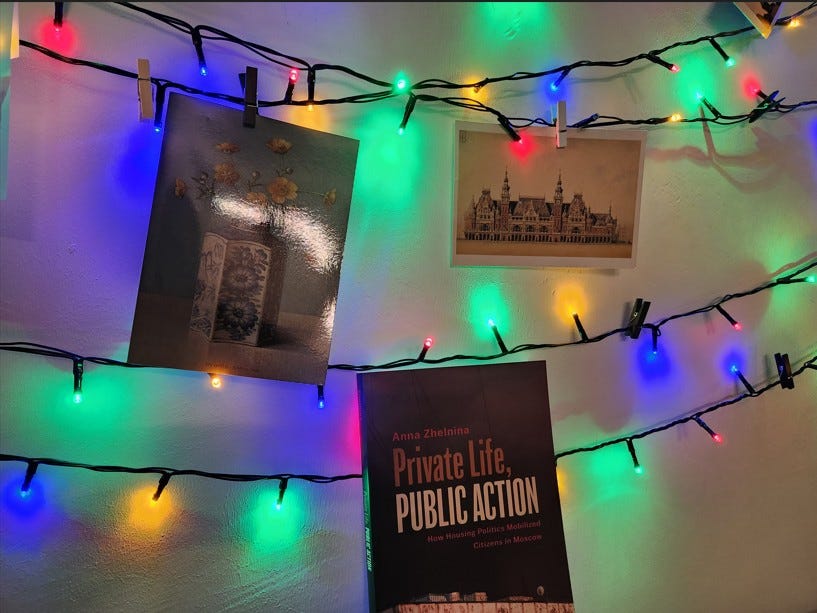
I felt similarly when I submitted the ERC proposal, my journal articles, and even these Substack posts: each to a different extent. These are things I created; I put a part of myself into these texts, and it’s hard to dissociate myself from my work. As authors, whatever it is that we’re writing, we associate ourselves deeply with what we do, and critique of our work can easily be perceived as critique (or lack of notice) of ourselves. This attachment to one’s work is actually a good sign as it indicates the opposite of alienation in the Marxist sense (dissociating completely from your labor is not necessarily a good thing); but it can also be painful and take a toll on one’s mental health.
Therefore, I will not say: “dissociate from what you produce.” I like feeling emotionally attached to what I make. But I think this entanglement of our selves and our work is not what readers see. When they critique the work, it is not a personal attack. When they don’t notice it or don’t understand it, perhaps they are simply not your target audience. And with unpublished work, like grant proposals or article manuscripts, you can always improve them: use the feedback, engage with it, and treat it as an opportunity to learn and improve.
Even so, I believe working with feedback without feeling personally hurt is a skill to be learned, not a given.
I wrote this short post (I know everyone is busy this time of year) as a form of self-persuasion. But perhaps reading about this will also be helpful to others: it’s okay to feel vulnerable when you create something and put it out there for others to see and judge. I won’t reduce it to pragmatism: it’s not only about getting (hopefully useful) feedback. It’s about being a creator, a writer, and allowing your work to meet the eyes of others.
I can so relate with this post. Creating and then sharing one's creation is an act of vulnerability, and it can get tough to not translate a criticism of one's work into a criticism of one's being. But I've been trying to stop doing that, reminding myself that I owe it to myself as a person in this world to simply put my thoughts out there. And that's the only way to find more like-minded people like myself.